- Langley Road, Brighton, MA
- 416-402-8274

iPSCs – The King of All Cells?
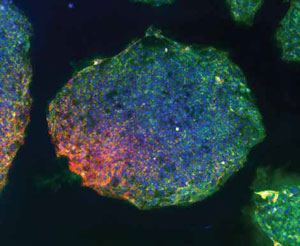 Stem cell research is rapidly evolving and has resulted in exciting, and often controversial science. Research has been going on for well over 50 years, with the potential to revolutionize human disease treatment. Pluripotent stem cells (PSCs) are particularly interesting because the unique ability of these cells to divide and replicate indefinitely make it of great commercial interest and may lead to potential use in regenerative medicine, disease treatment and reversal, targeted cell therapy, tissue regeneration, among others.
Induced pluripotent stem cells, also known as iPSCs, are directly derived from adult cells and were a groundbreaking discovery in 2006, opening this stem cell field to masses of scientists and offering the promise of unique capabilities for targeted disease research. With this groundbreaking discovery, iPSCs are frequently being used in personalized drug discovery and understanding the patient-specific basis of disease.
As Michael Christman, PhD, President and Chief Executive Officer of the Coriell Institute for Medical Research said, “Screening drug candidates in a stem cell model will likely result in effective drugs getting into the market faster, since testing in the diseased environment has been proven even prior to the clinical trial. Significantly, this technology has the potential to offer medicines that are better targeted for individual patients. Finally, it also promises to reduce the cost burden of research and development, and in turn, the cost to patients for their prescription drugs.”
Understandably, because of their unique properties, there is increased market interest in iPSCs in the industry. Scientists are now making progress towards using iPSCs in the treatment of Parkinson’s disease, platelet deficiency, spinal cord injury, and macular degeneration. Patient-derived iPSCs have been shown to be useful for modeling diseases and screening drug candidate libraries.
In addition, to these medical applications, iPSCs can be used in animal biotechnology. Disease models can be generated and useful substances, such as enzymes, that are deficient in patients with genetic diseases, can be produced in large animals by the use of animal iPSCs. One of the most revolutionary applications of iPSCs is the generation of organs for human transplantation in vitro.
Currently, the bulk of the work is occurring around four potential areas for iPSC commercialization— drug development and discovery, cellular therapy, toxicology screening, and stem cell bio-banking. Stem cell research is developing fast, and systems are in place to employ this research to develop cutting-edge medical products and solutions.




Connect + Innovate
February 22, 2014 / 0 commentsWhat is Retinol? The Superhero Anti-Aging Ingredient
September 06, 2021 / 0 comments